Best Yoga Poses for Athletes in Norwalk: How Heat, Humidity, and Smart Movement Support Strength, Mobility, and Recovery
If you’re an athlete in Norwalk—whether that means high school or college sports, weekend leagues, or heavy strength and cardio training—you’re probably already doing a lot:
- Practices
- Lifts
- Conditioning
- Games and tournaments
What most athletes aren’t doing enough of is the thing that keeps all of that sustainable: mobility, recovery, and nervous‑system care.
That’s where yoga—and especially heated yoga done intentionally—can become a powerful part of a training plan, not just a nice extra.
At YogaSol in Norwalk, we work with:
- Soccer, lacrosse, field hockey, football, tennis, baseball, track athletes, you name it.
- Adults who lift, run, and do conditioning
- Pros and semi‑pros
This guide breaks down some of the best yoga poses for athletes, why heat and humidity matter, and how to realistically plug yoga or Strength & Mobility into your week without overwhelming your schedule.
Why Athletes Need More Than Just Lifting and Practice
Most athletes are already doing “the big rocks”:
- Strength training in the weight room
- Cardio and conditioning
- Sport‑specific drills and scrimmage
The gaps usually show up as:
- Tight hips and hamstrings
- Cranky low backs
- Stiff ankles and tight calves
- Limited shoulder mobility
- Trouble unwinding after games and tournaments
- Feeling wiped or “fried” even when they’re technically doing all the right things
Yoga isn’t about replacing your strength program or conditioning plan. For athletes, it’s about:
- Improving movement quality so you can express strength safely
- Increasing usable range of motion in the joints you load the most
- Supporting recovery and nervous‑system downshift so your body can adapt to all the training you’re doing
- Building heat and humidity tolerance for summer sport days and elevation changes
When you add heat (90–110°) and humidity (~60%)—like we have in most classes at YogaSol in Norwalk—you get extra advantages:
- Muscles and connective tissue warm up faster
- Range of motion becomes more accessible
- Your body starts adapting to breathing and moving in “sticky” conditions similar to hot, humid outdoor games
For outside sports in Connecticut (soccer, lacrosse, field hockey, football, tennis, track, baseball/softball), that kind of heat adaptation can make a real difference.
Best Yoga Poses for Athletes (and Why They Matter)
Here are some key poses we use in our yoga classes at YogaSol in Norwalk in our hot yoga 26 & 2, Sunrise Yoga, Strength & Mobility, and Yin classes.
Each pose includes:
- What it targets
- Why it matters for athletes
- How to do it (basic version)
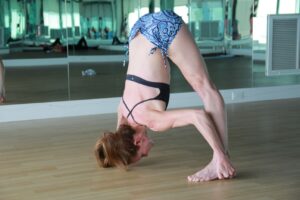
1. Standing Separate Leg Stretching Pose
Targets: Hamstrings, calves, low back, inner thighs
 Why athletes love it:
If you run, jump, or cut (soccer, lacrosse, field hockey, football, basketball, tennis, track), your hamstrings and posterior chain take a beating. This pose lengthens the back of the legs and decompresses the spine.
How to do it:
- Stand with your feet wide apart (3–4 feet).
- Turn your toes slightly in, heels slightly out.
- Inhale, lift your chest; exhale, hinge at your hips and fold forward, bringing hands to the floor, blocks, or ankles.
- Let your head hang heavy; keep a soft bend in the knees if needed.
- Breathe here for 5–10 slow breaths.
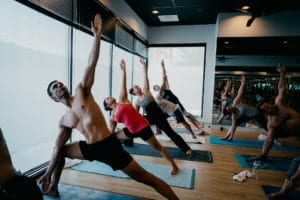
2. Triangle Pose
Targets: Hips, outer thighs, hamstrings, side body, obliques, shoulders
 Why athletes love it:
Triangle builds lateral strength and mobility—key for cutting, changing direction, and staying strong through hips and knees.
How to do it:
- Step your feet wide, turn your right foot out and left foot slightly in.
- Extend arms out at shoulder height.
- Reach forward with your right hand, then hinge and bring your right hand to your shin, block, or the floor outside your foot.
- Extend your left arm up, opening your chest.
- Keep both legs strong and active.
- Hold 5–8 breaths, then switch sides.
3. Low Lunge / Crescent Lunge
Targets: Hip flexors, quads, psoas
Why athletes love it:
So much of sport and lifting shortens hip flexors. Long, slow lunges help restore length and reduce low‑back compensation.
How to do it:
- From hands and knees or Down Dog, step your right foot between your hands.
- Lower your back knee to the mat (pad with a blanket if needed).
- Stack your front knee over your ankle.
- Lift your chest; optionally, reach arms overhead.
- Send your hips slightly forward until you feel a stretch in the front of the left hip.
- Breathe 5–8 breaths, then switch sides.
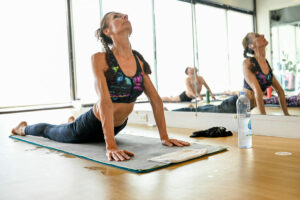
4. Spine Strengthening Series Variations
(Cobra / Locust / Bow – posterior chain)
Targets: Back muscles, glutes, hamstrings, shoulders
Why athletes love it:
Strong, awake posterior chain = better sprinting, jumping, posture, and resilience against back pain.
Basic Cobra (Bhujangasana) version:
- Lie on your stomach, legs extended, tops of feet on the floor.
- Place hands under shoulders, elbows close.
- Press gently into hands, lifting your chest while keeping hips down.
- Engage your back, not just your arms.
- Hold 3–5 breaths, then lower.
You can progress to full Locust or Bow as your strength and control improve.
5. Reclined Twist
(Supta Matsyendrasana)
Targets: Spine, low back, glutes
Why athletes love it:
Great for unwinding the spine after heavy lifting, running, or contact. Supports recovery and nervous‑system downshift.
How to do it:
- Lie on your back, hug your right knee into your chest.
- Guide your right knee across your body to the left, letting it fall toward the floor.
- Extend your right arm out to the side, gaze toward your right hand if comfortable.
- Breathe slow and deep for 8–10 breaths; switch sides.
You can find this pose in most of our Yin Yoga classes.
6. Awkward Pose or Chair Pose
Targets: Quads, glutes, core, ankles
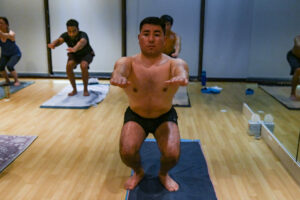
Why athletes love it:
Chair builds functional lower‑body strength and stability—similar to an isometric squat—without heavy load.
How to do it:
- Stand with feet hip‑distance apart.
- Inhale, raise your arms. Exhale, sit your hips back as if into a chair.
- Keep weight in your heels, chest lifted, core engaged.
- Hold 5–10 breaths, then stand back up.
7. Bridge Pose
(Setu Bandha Sarvangasana)
Targets: Glutes, hamstrings, lower back
Why athletes love it:
Reawakens the backside after long periods of sitting or flexion‑heavy training. Great for knee and hip support.
How to do it:
- Lie on your back, bend knees, feet hip‑width, close to your glutes.
- Press into feet, lift hips up.
- Option to interlace hands under you and roll shoulders under.
- Keep knees tracking over ankles.
- Hold 5–8 breaths, then lower slowly.
8. Legs Up the Wall
(Viparita Karani)
Targets: Recovery, venous return, nervous system
Why athletes love it:
Simple, powerful recovery pose. Reduces swelling in legs, calms the nervous system, and helps transition out of “go” mode.
How to do it:
- Sit sideways next to a wall, then swing your legs up as you lie on your back.
- Scoot your hips as close to the wall as is comfortable.
- Let arms rest by your sides, palms up.
- Stay 3–10 minutes, breathing slowly.
How Often Should Athletes Do Yoga?
There’s no one perfect number, but most strength and conditioning coaches and sports medicine professionals agree that athletes benefit from:
- In‑season:
- About 1–2 sessions per week focused on mobility, flexibility, and recovery.
- Off‑season or lighter periods:
- 2–3 sessions per week, especially to build durability and address movement limitations.
For many athletes in Norwalk, that might look like:
- 1× Strength & Mobility class per week
- 1× Yin or Sunrise Yoga session per week
- Optional extra Yin or Sunrise when schedule allows
That’s enough to make a difference without competing with practices, lifts, and games.
How YogaSol Fits into an Athlete’s Week in Norwalk
At YogaSol, we don’t try to replace your strength and skills programs. We focus on what most athletes are missing:
- Movement quality
- Heat and humidity adaptation
- Recovery and nervous‑system support
Here’s how specific classes can fit into your routine:
Strength & Mobility
- Slow, precise movement patterns
- Joint stability, range of motion, and control
- Some light weight options (but not heavy strength cycles)
Best for: Athletes who want to move better, reduce injury risk, and clean up how they squat, hinge, rotate, and land—so they can take that back to the gym or field.
Sunrise Yoga (Flow)
- Energizing flow to wake up the body
- Breath + focus + light heat for heat adaptation
- Great on stiff mornings, off‑days, or in the off‑season
Best for: Athletes who feel stiff or foggy in the mornings and want an energizing way to “turn on” for the day.
Yin Yoga
- Long, passive holds
- Deep tissue and joint work
- Strong nervous‑system downshift
Best for: Recovery days, post‑tournament Sundays, or when you need to help your body actually absorb all the training you’ve been doing.
Hot Yoga 26&2
- Structured, repeatable sequence
- High heat; strong mental focus
- Builds discipline and awareness of how you move under stress
Best for: Athletes who already have a base in heated classes and want a mental and physical challenge they can track over time.
And if you’re new, our Intro Pass—5 classes for $59—is an easy way to test a mix of classes and see what helps your body the most:
Heat and Humidity Adaptation for Connecticut Athletes
Most outdoor sports in Connecticut—soccer, lacrosse, field hockey, football, tennis, track, baseball, softball—end up competing in some pretty warm, humid conditions, especially in late spring and summer.
Training regularly in a 90–110° room at ~60% humidity:
- Helps your body adjust its sweat response
- Teaches you how to breathe and pace in “sticky” air
- Reduces the shock of stepping into a hot, humid tournament or showcase
This doesn’t replace sensible outdoor acclimatization and hydration, but it can be a smart complement
FAQ: Yoga for Athletes in Norwalk
Is yoga enough strength training for athletes?
Usually not. Think of yoga and Strength & Mobility at YogaSol as complements to your lifting and sport work, not replacements. They help you move better and recover better so you can get more from the strength and cardio you’re already doing.
Will yoga make me “too loose” or flexible?
When done well, yoga helps you gain usable range of motion with control, not floppy joints. Classes like Strength & Mobility and Sunrise Yoga build both mobility and stability.
Is heated yoga safe for athletes?
For most healthy athletes, yes—with common‑sense hydration and listening to your body. If you have heart, kidney, or other significant medical issues, talk to your doctor first. We’re happy to help you choose the right classes and intensity.
How soon before or after practice can I do yoga?
- Before: Sunrise or hot yoga flow on lighter days can be a great pre‑day or pre‑practice routine. Avoid very intense heat right before a hard game.
- After: Yin or gentle hot yoga the evening after or day after a game or lift can support recovery.
If you’re an athlete in Norwalk—whether that’s varsity, club, college, or adult rec—and you’re tired of feeling tight, beat‑up, or stuck at the same level, yoga can be a powerful missing piece.
You don’t have to be “good at yoga.” You just have to be willing to see what happens when you give your body (and nervous system) a different kind of support.
Start with our Intro Pass (5 classes for $59) and we’ll help you choose a mix of Strength & Mobility, Sunrise Yoga, and Yin that fits your season and schedule.